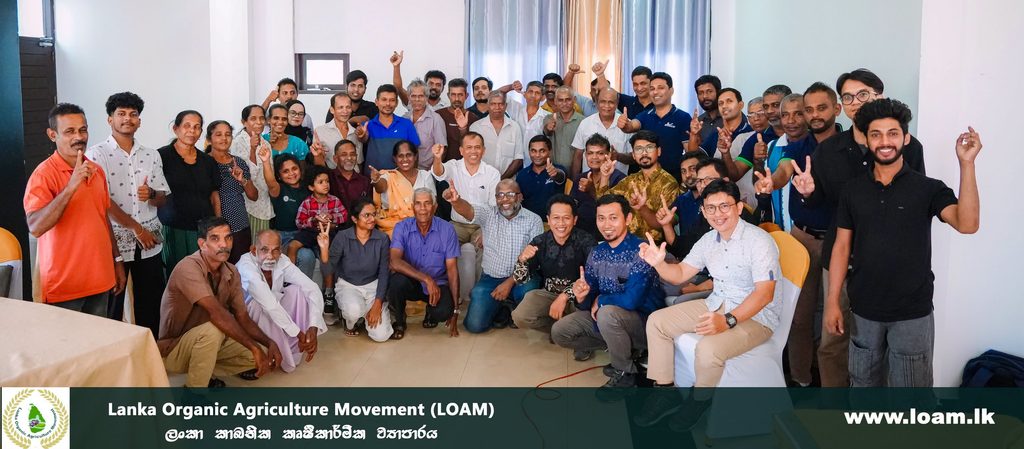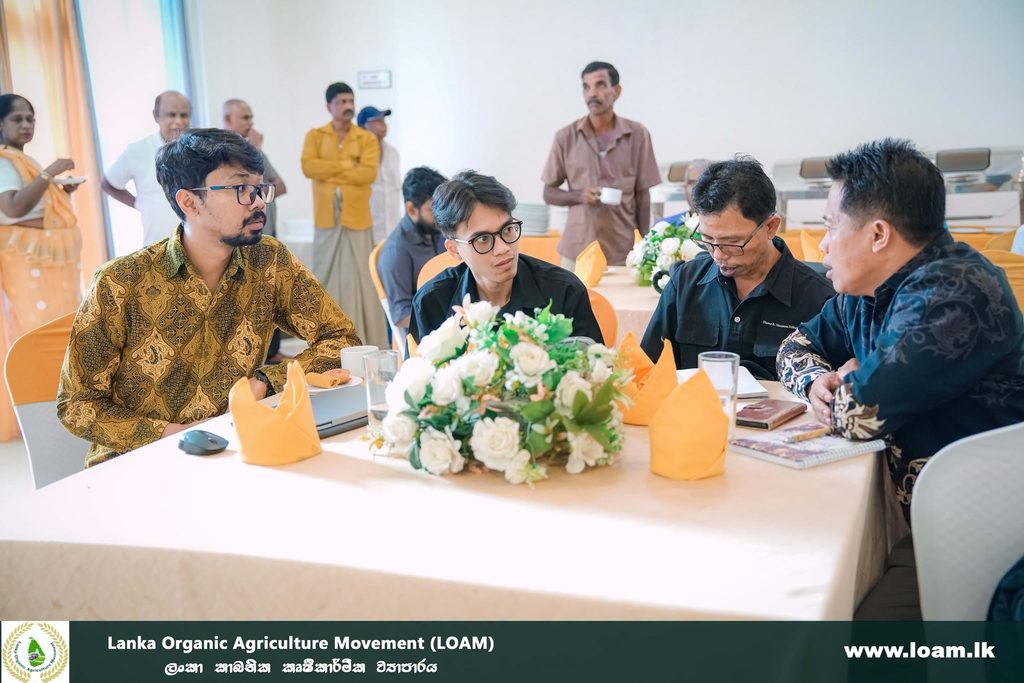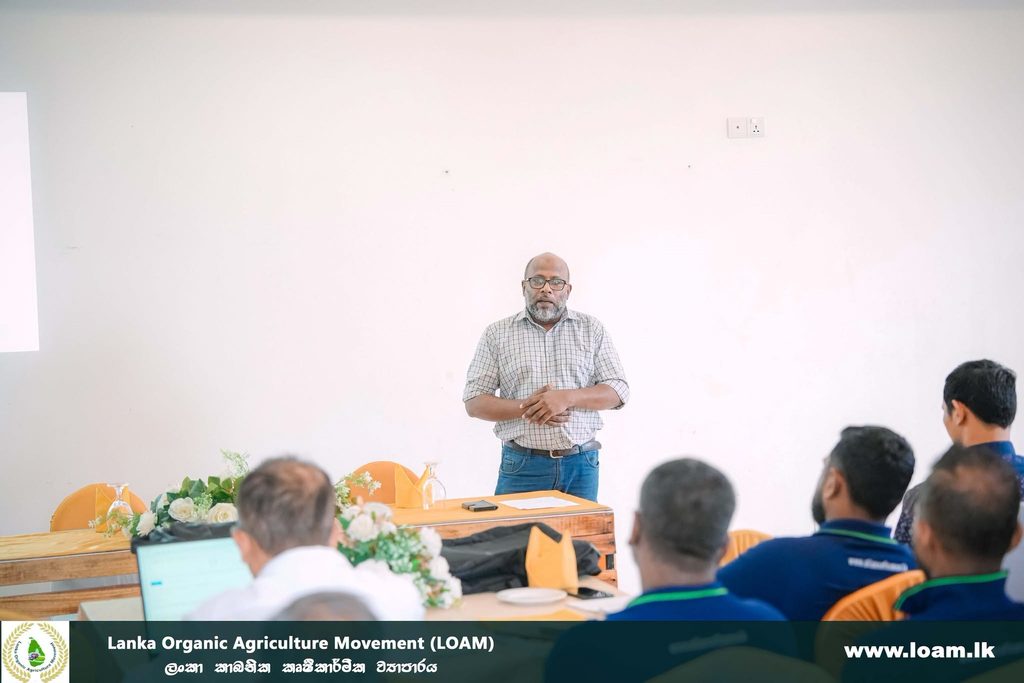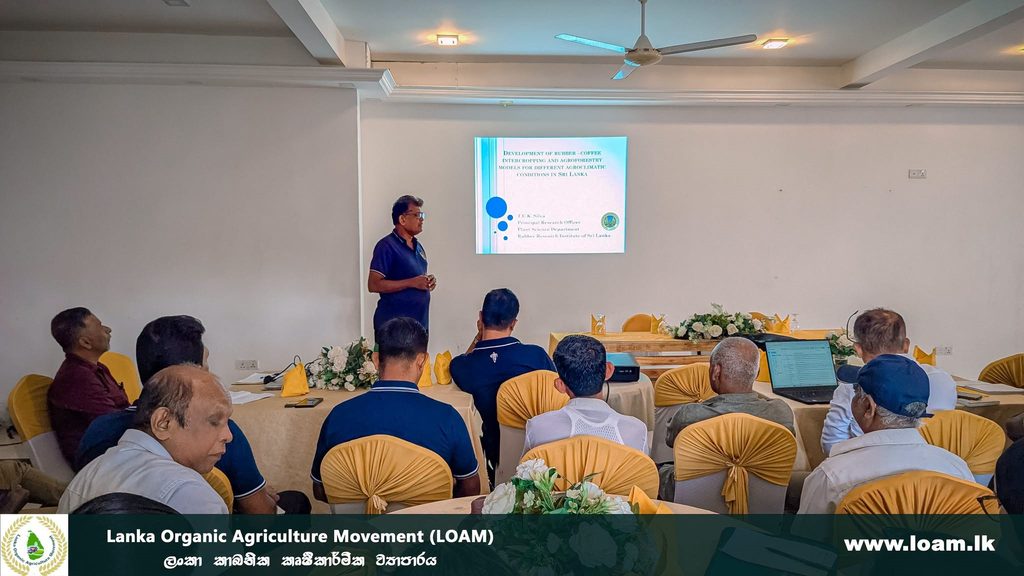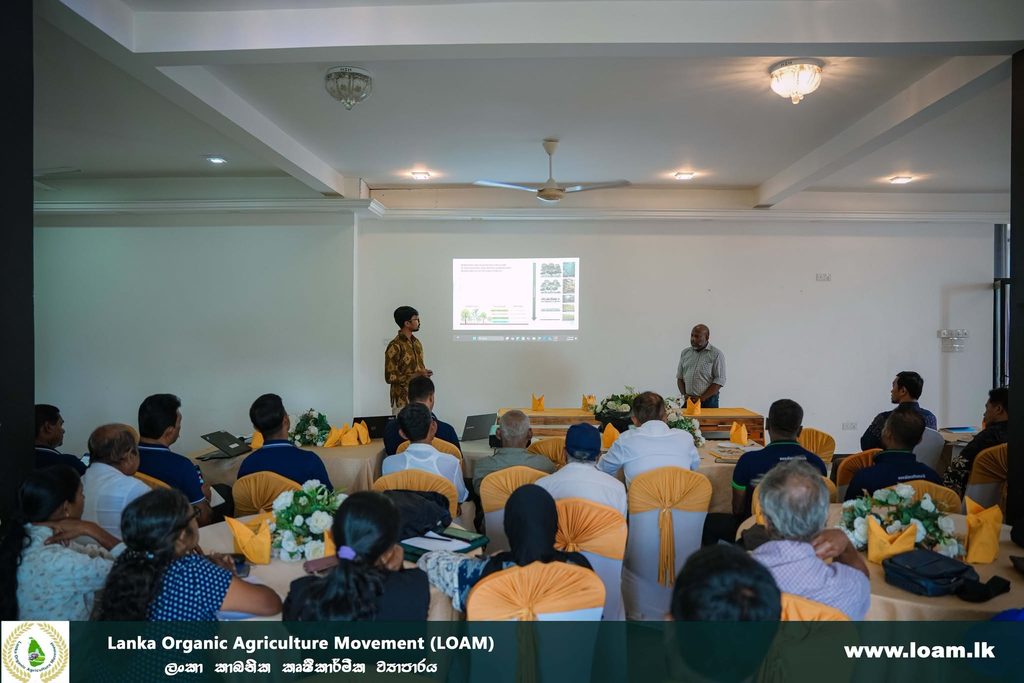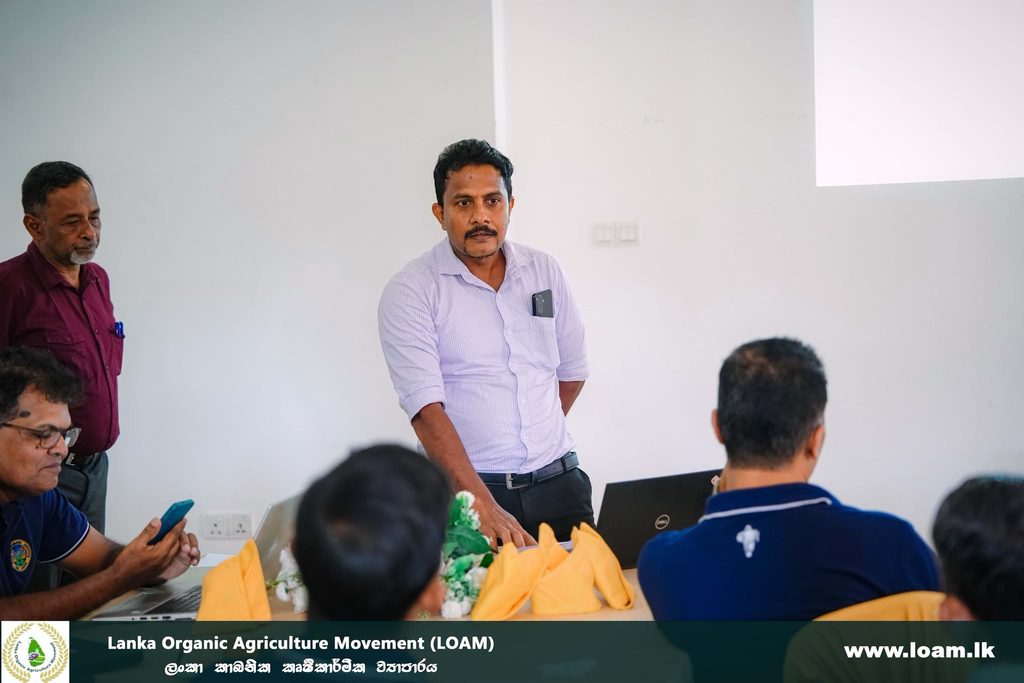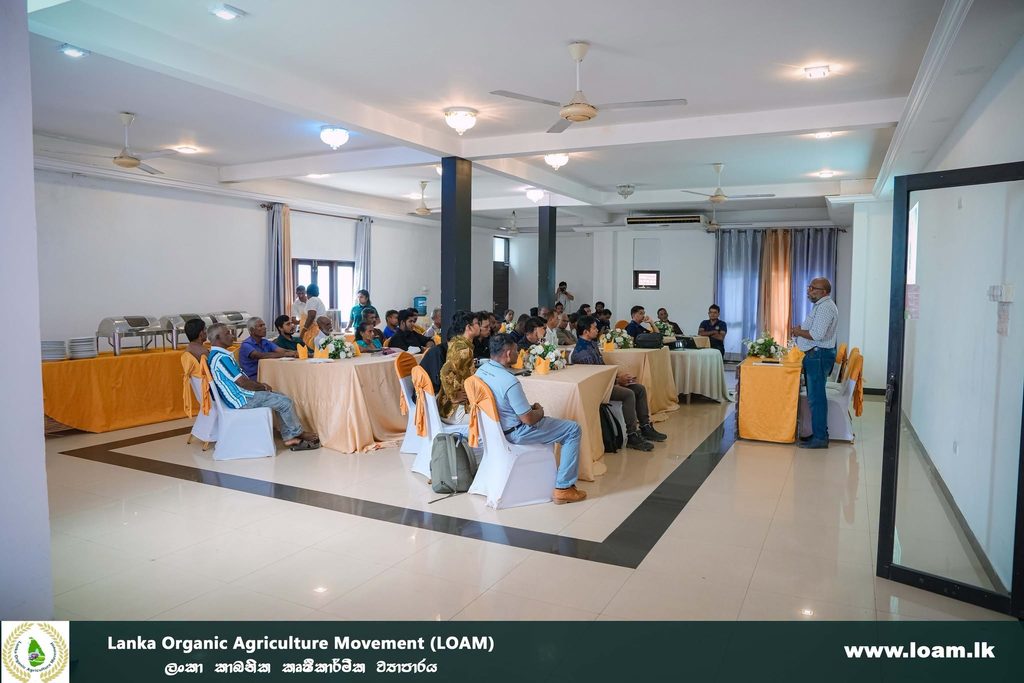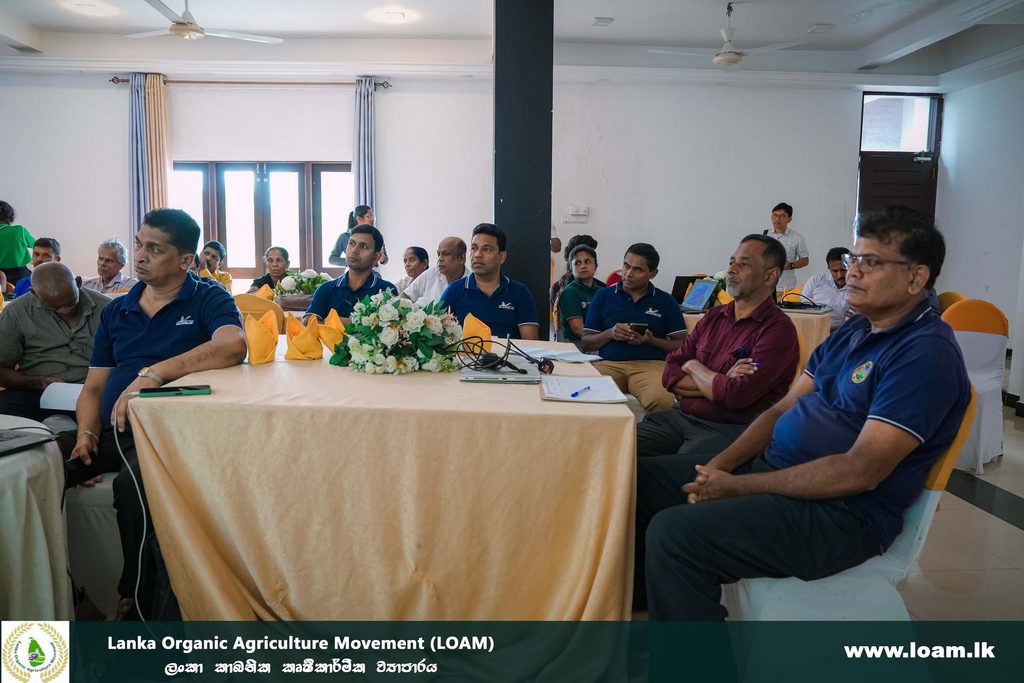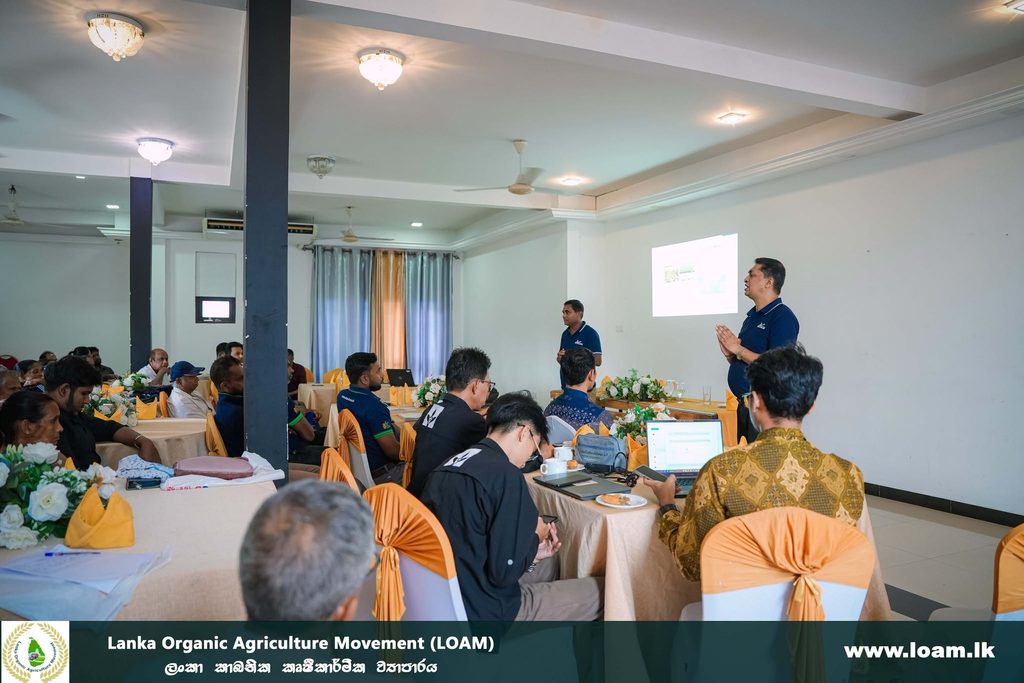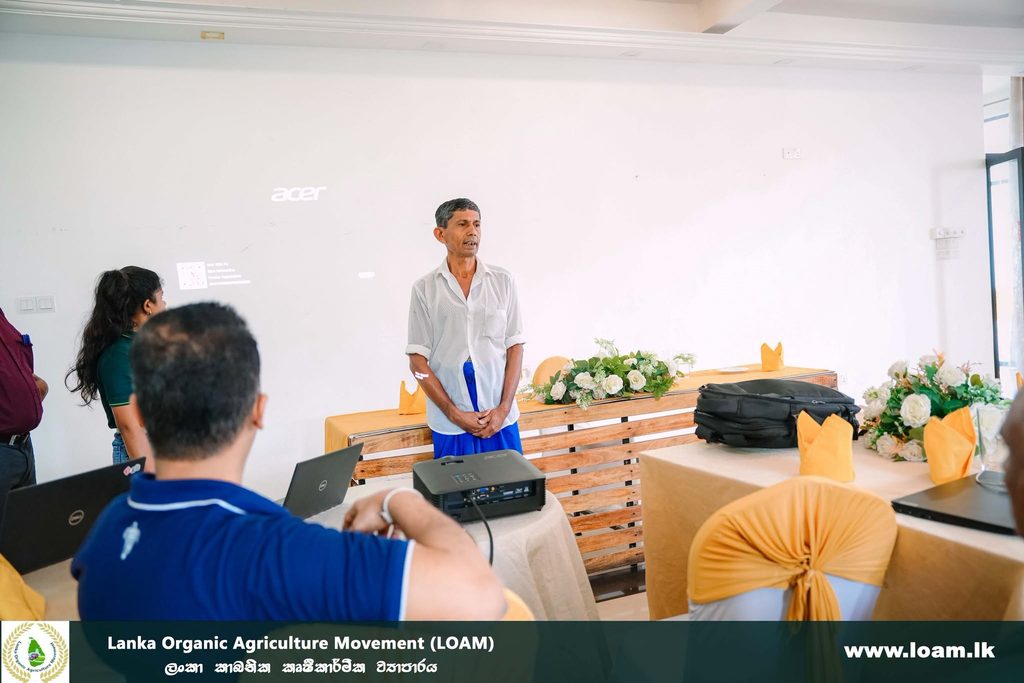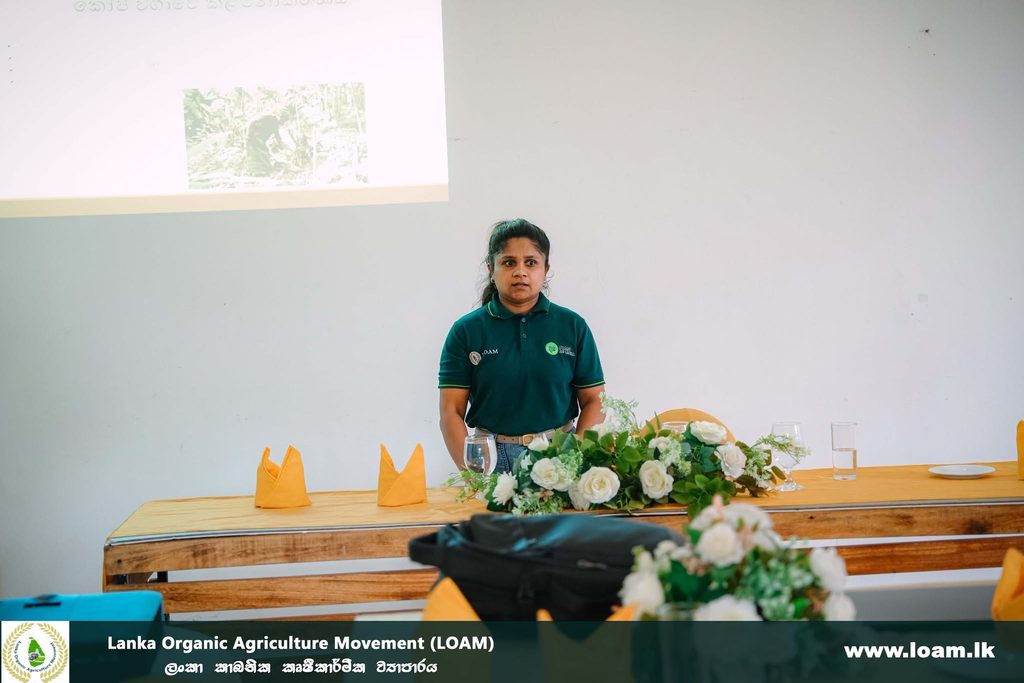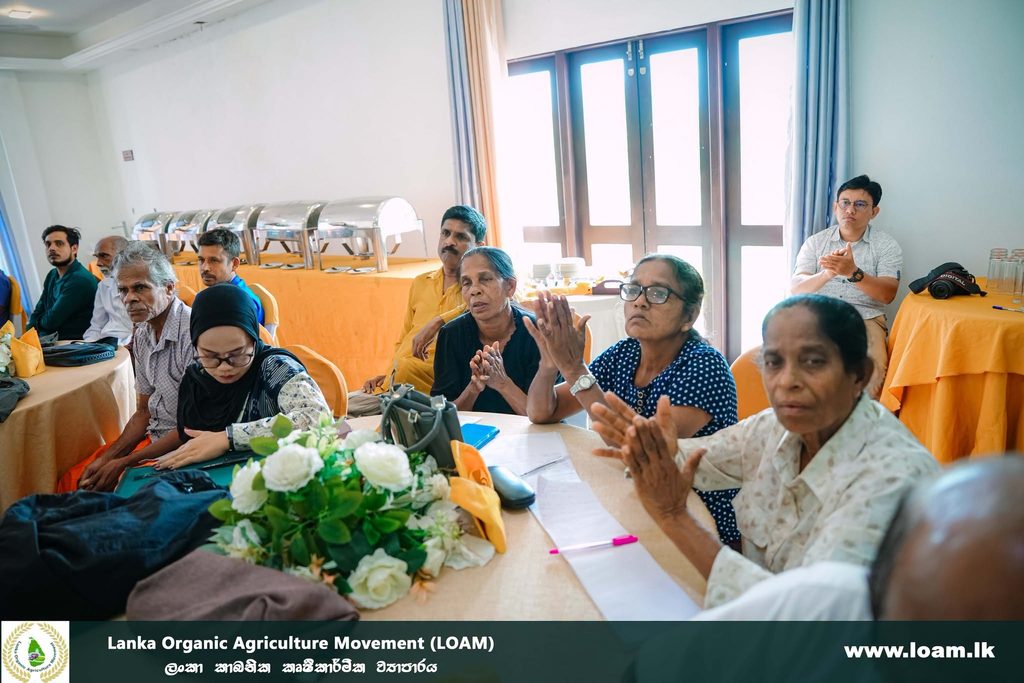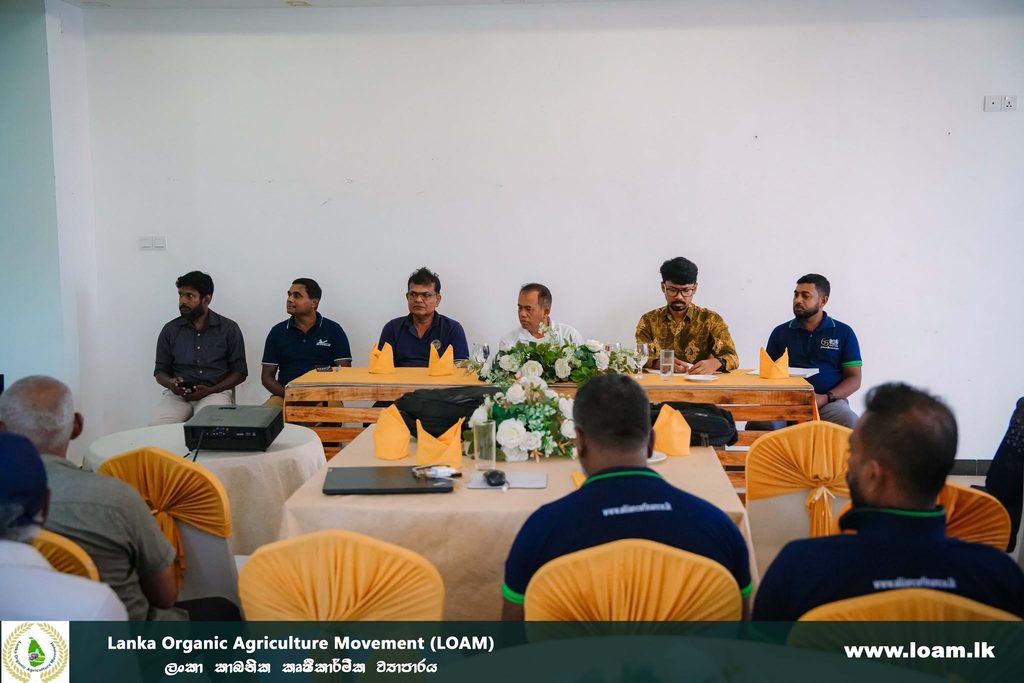
The Lanka Organic Agricultural Movement (LOAM), in collaboration with its Indonesian partner, Hanns R. Neumann Stiftung (HRNS), successfully organized an inspiring experience-sharing workshop on Coffee Cultivation Under Diverse Canopy Systems on 6th November at Capital Resort, Monaragala.
The workshop brought together experts, researchers, industry representatives, and coffee farmers to share knowledge, practical experiences, and innovative approaches to sustainable coffee cultivation under mixed-cropping systems and rubber-based agroforestry.
Drawing on experiences from Indonesia and Sri Lanka, the discussions highlighted the potential of agroforestry and analog forestry as nature-based solutions for building resilient, productive, and environmentally sustainable coffee-growing systems.
Particular attention was given to integrating coffee into diverse, multi-layered tree-based farming systems that mimic natural forest structures. Analog forestry offers an important opportunity to restore ecological functions while producing economically valuable crops, enhancing biodiversity, improving soil health, conserving water, and strengthening farmers’ livelihoods.
By promoting diversified canopy systems, farmers can reduce dependence on monocultures, improve resilience to climate change, diversify income sources, and contribute to landscape restoration and sustainable rural development.
Distinguished Resource Persons:
• Dr. Kalum Silva – Principal Research Officer, Rubber Research Institute (RRI), Sri Lanka
• Arman Ginting – Hanns R. Neumann Stiftung (HRNS)
• Harya Koostanto – Hanns R. Neumann Stiftung (HRNS)
• Ajantha Palihawadana – Special Project Director, LOAM
The workshop also benefited from the valuable participation and contributions of representatives from Michelin Lanka, Alliance Finance Company PLC (AFC), the Department of Export Agriculture, and enthusiastic coffee farmers from the Monaragala region.
The event served as a valuable platform for strengthening knowledge exchange, fostering partnerships, and exploring opportunities to advance sustainable coffee production through agroforestry and analog forestry.
Moving beyond conventional monoculture farming towards diverse, forest-inspired agricultural landscapes can offer a promising pathway for the future of coffee cultivation in Sri Lanka.
Through collaboration, innovation, and ecological farming practices, we can work towards a future where coffee production, biodiversity conservation, climate resilience, and farmers’ prosperity grow together.
Growing coffee, restoring nature, and building resilient livelihoods!