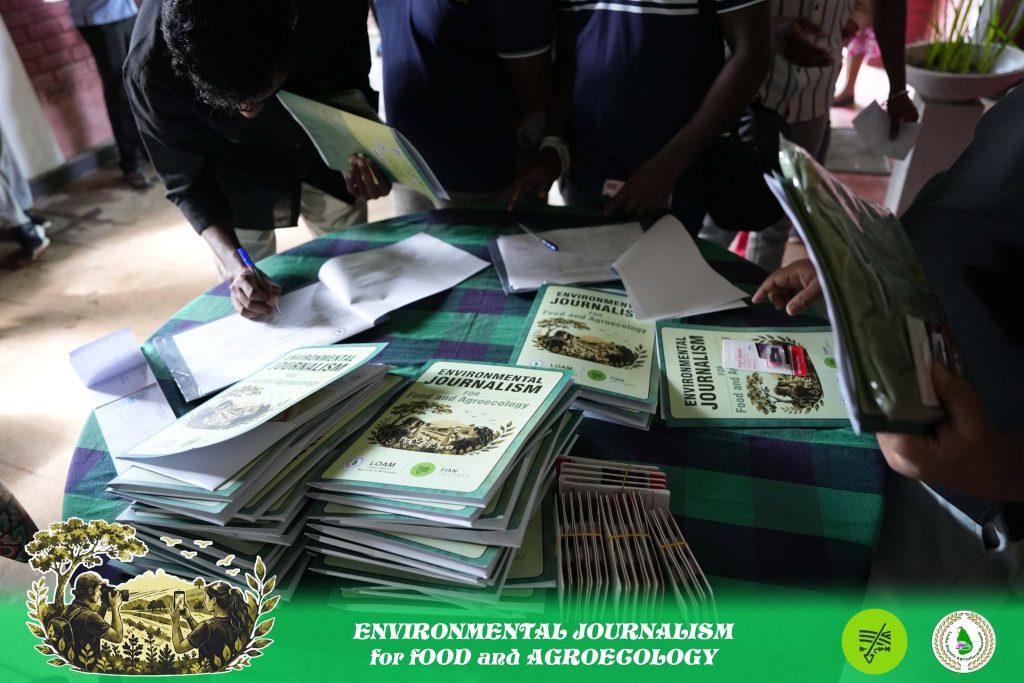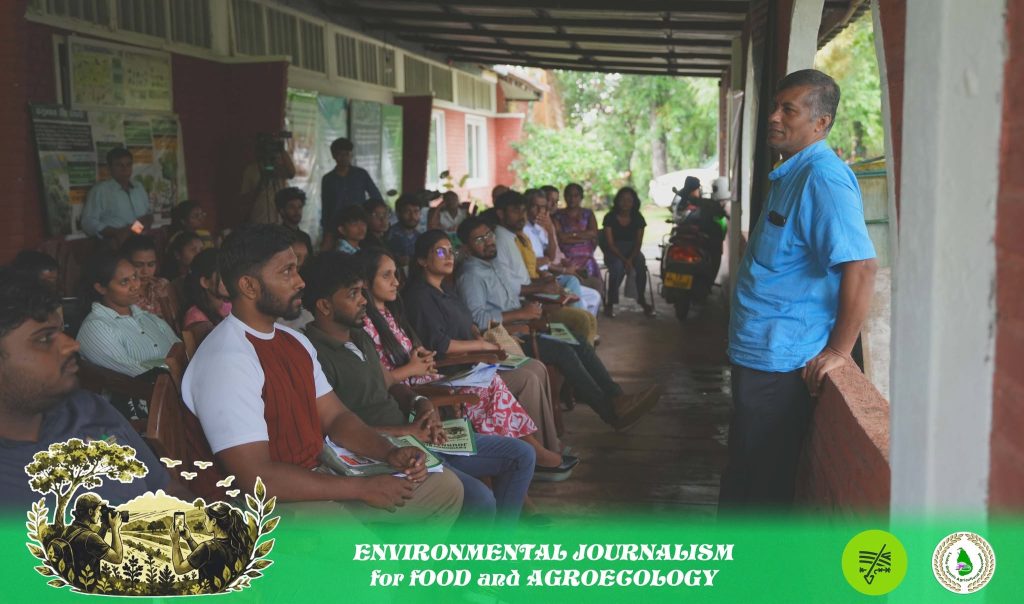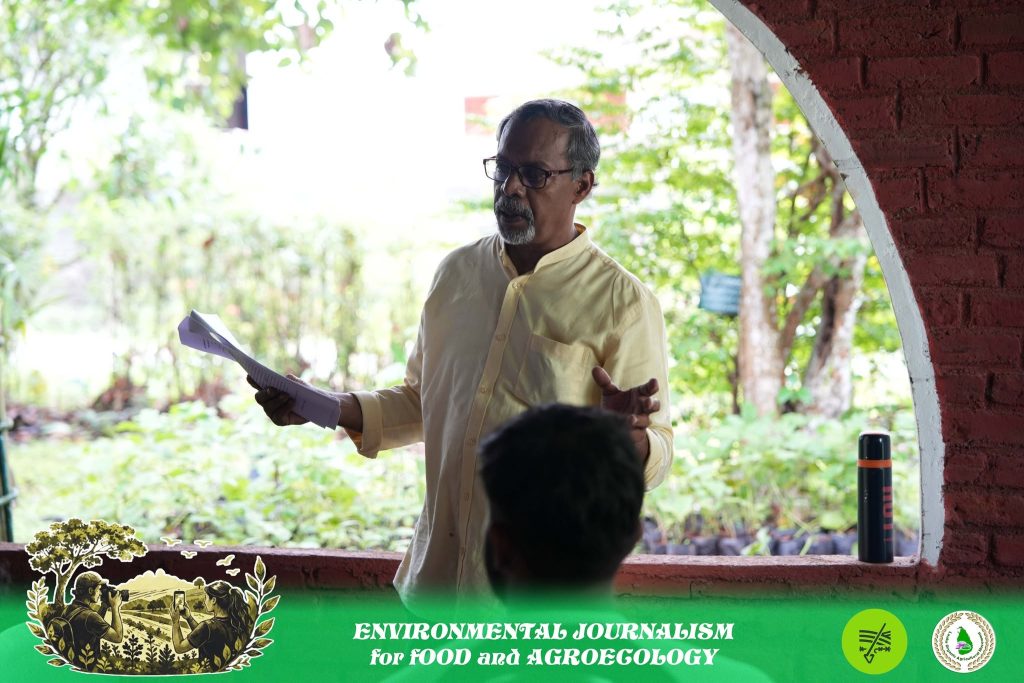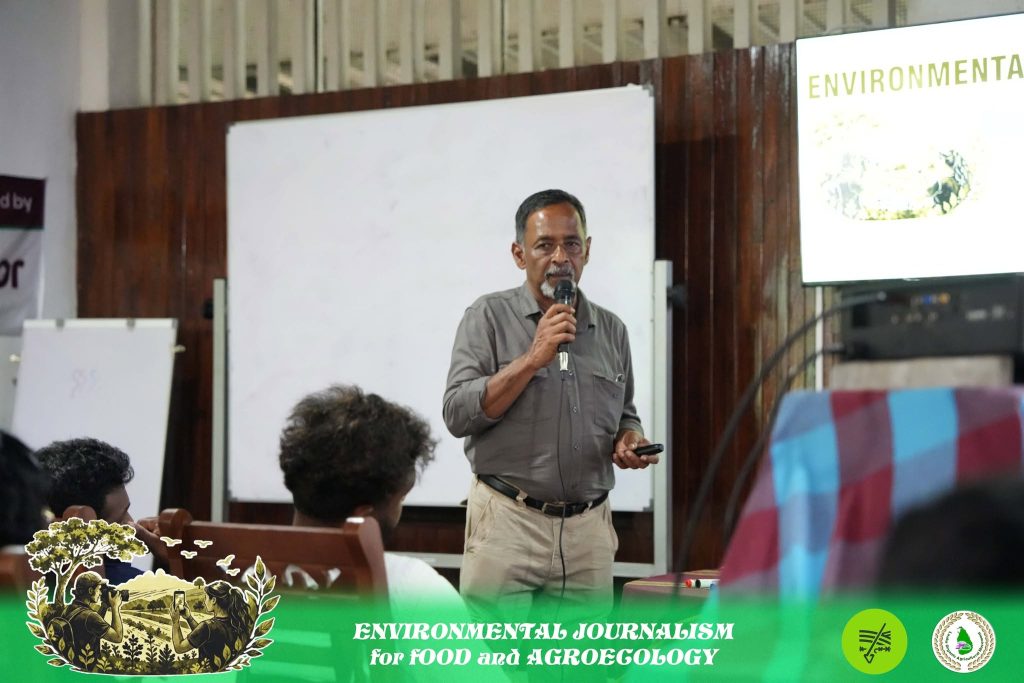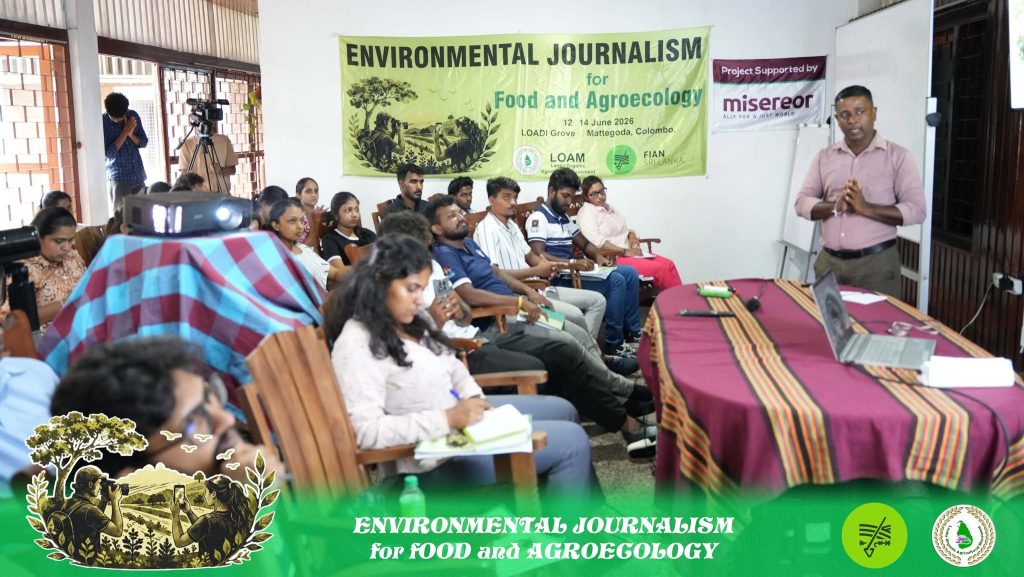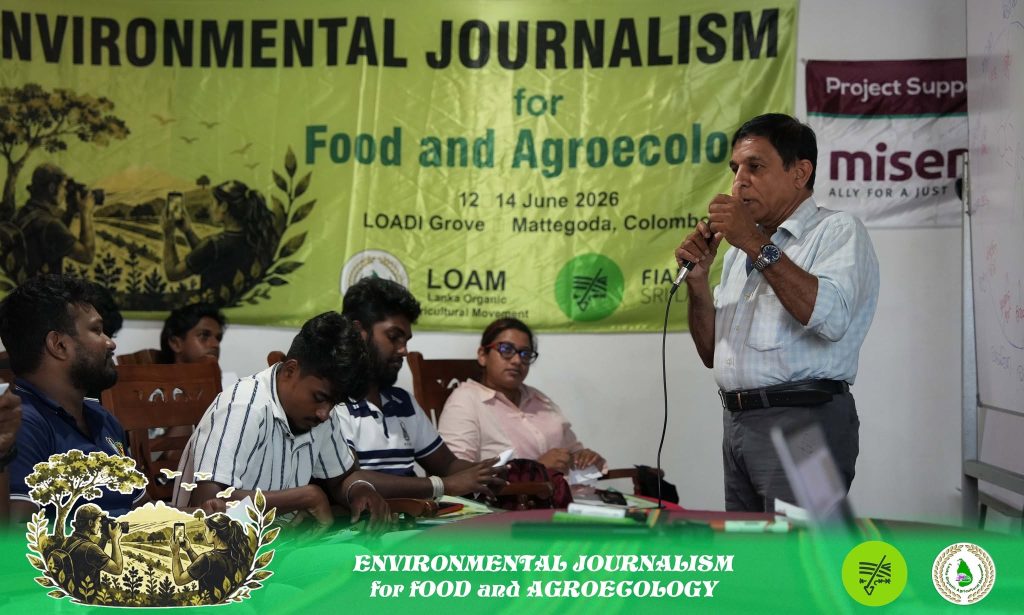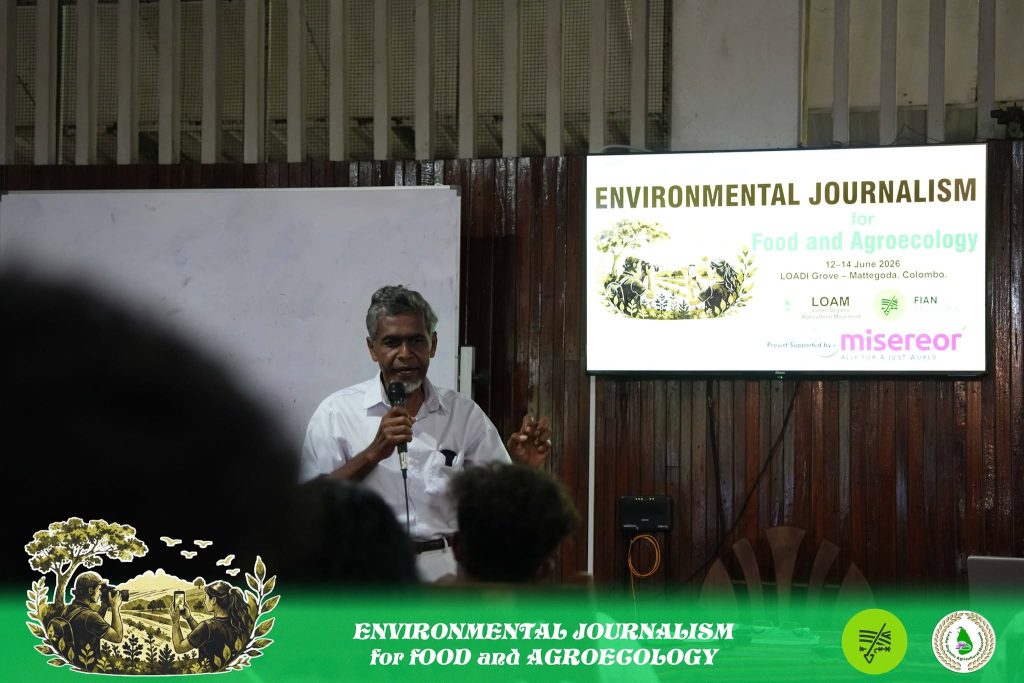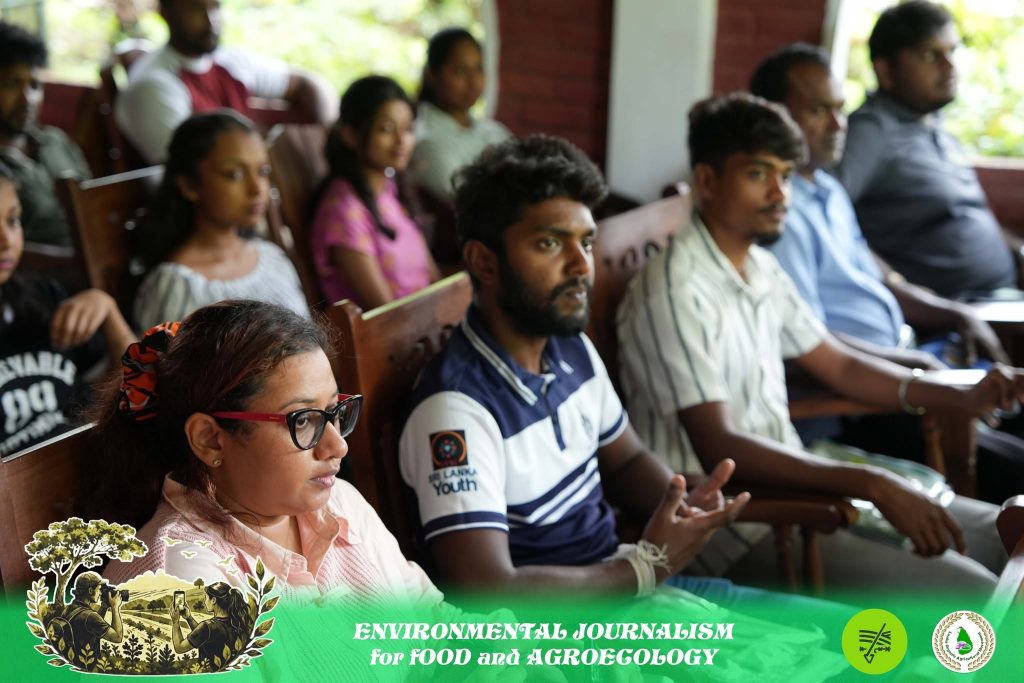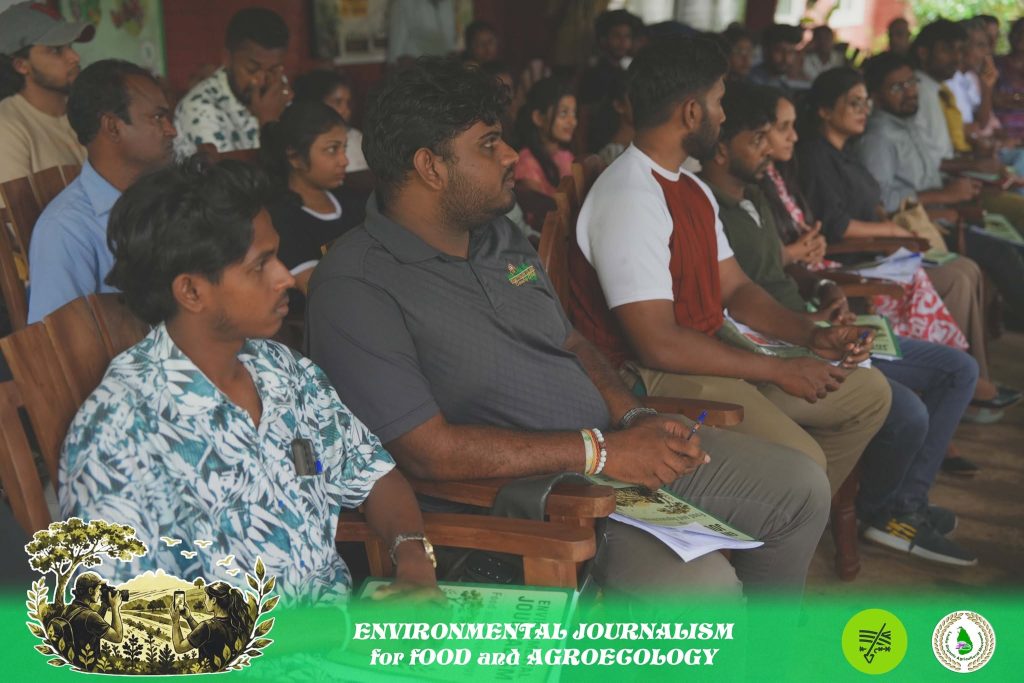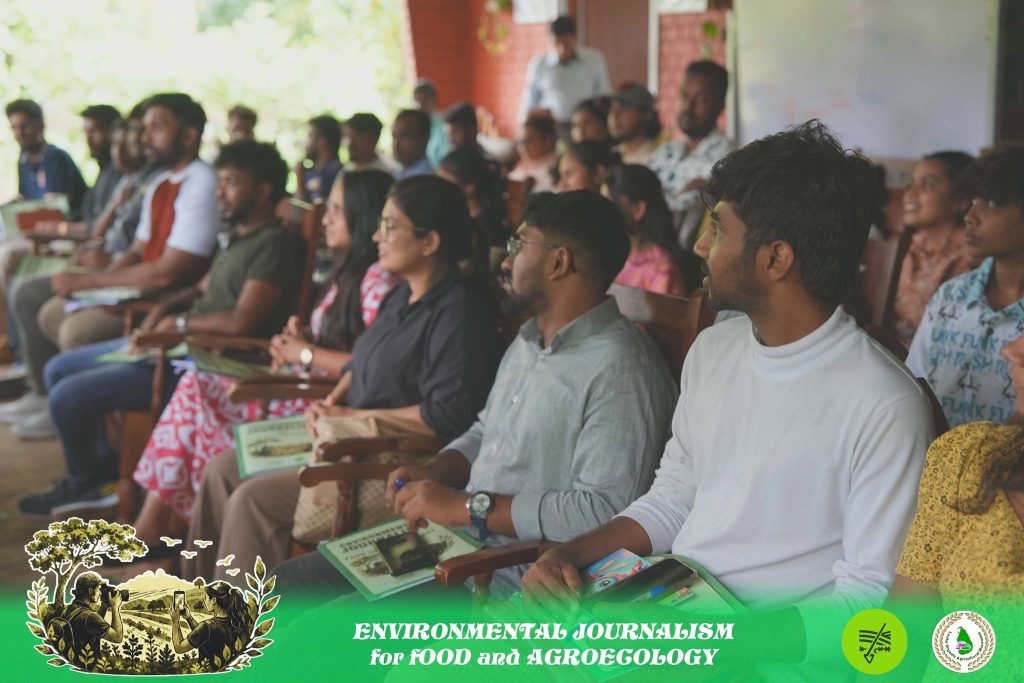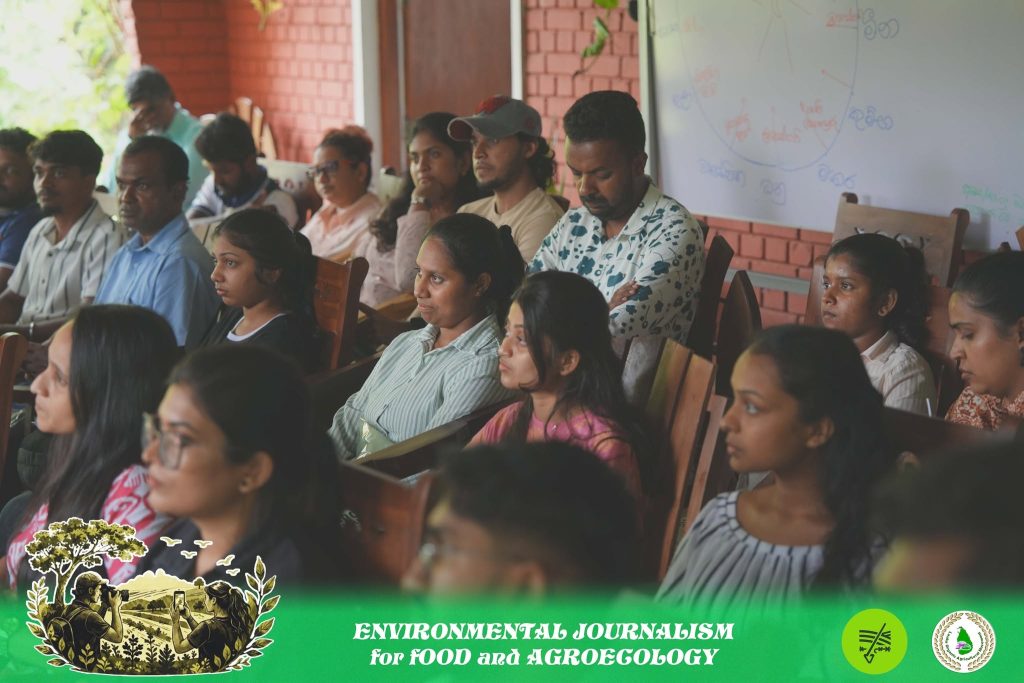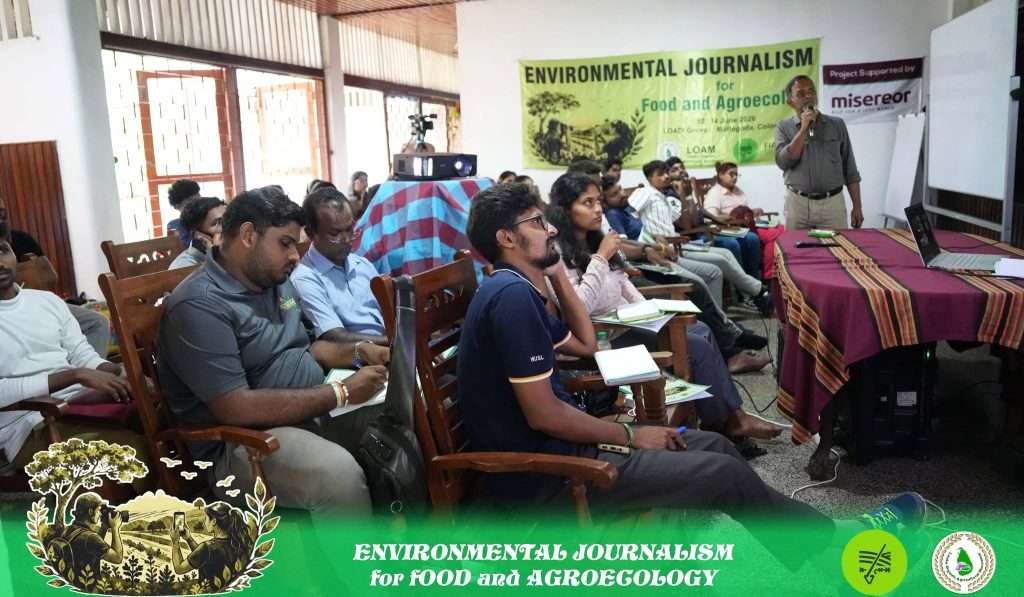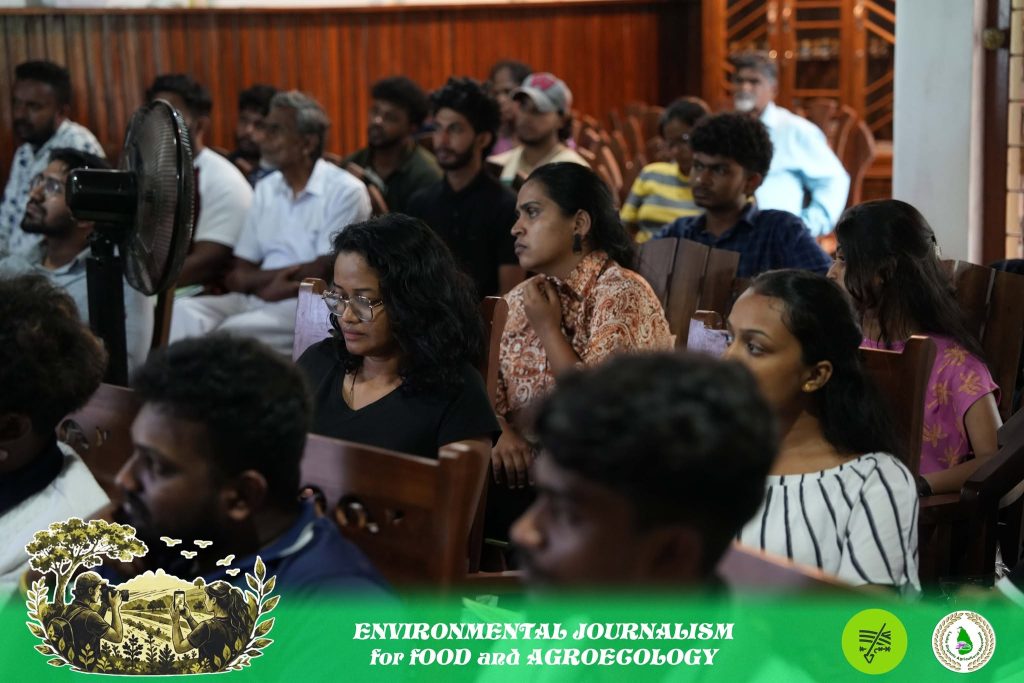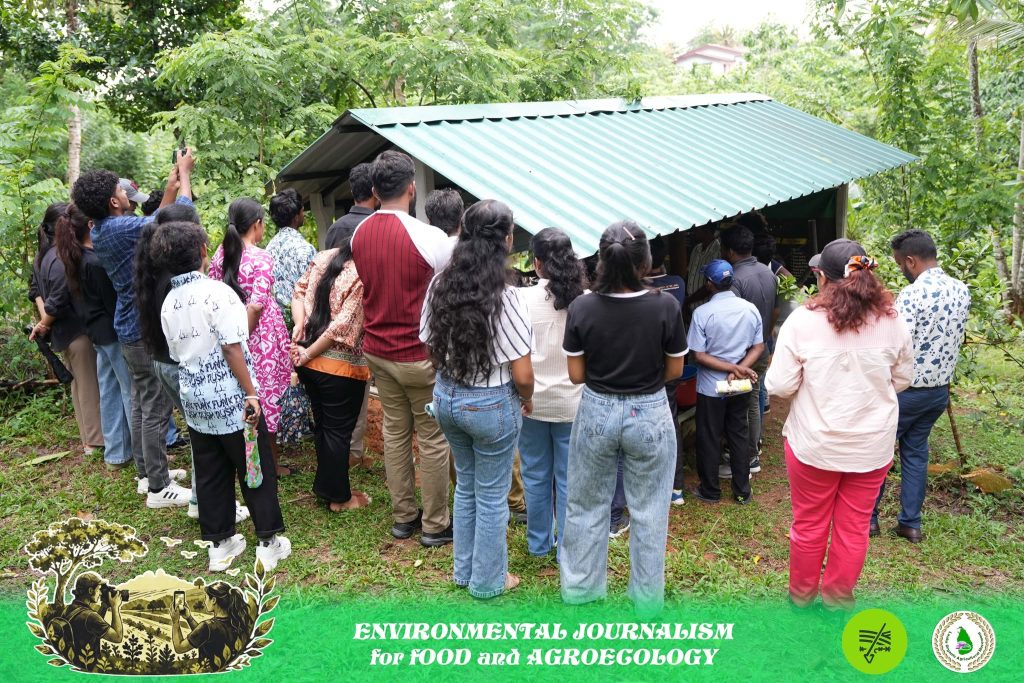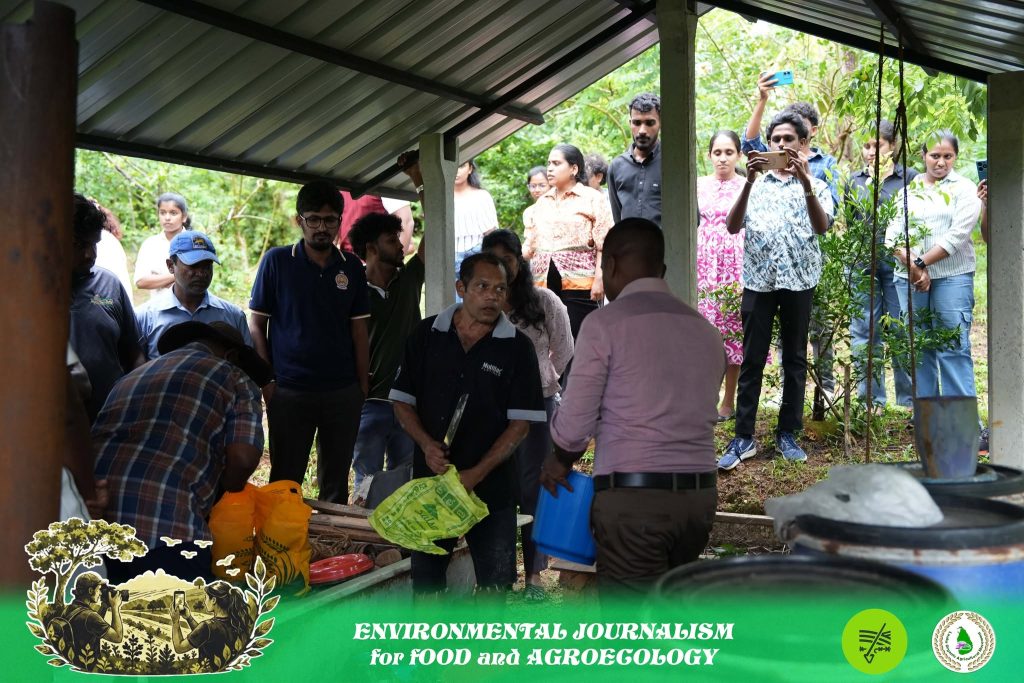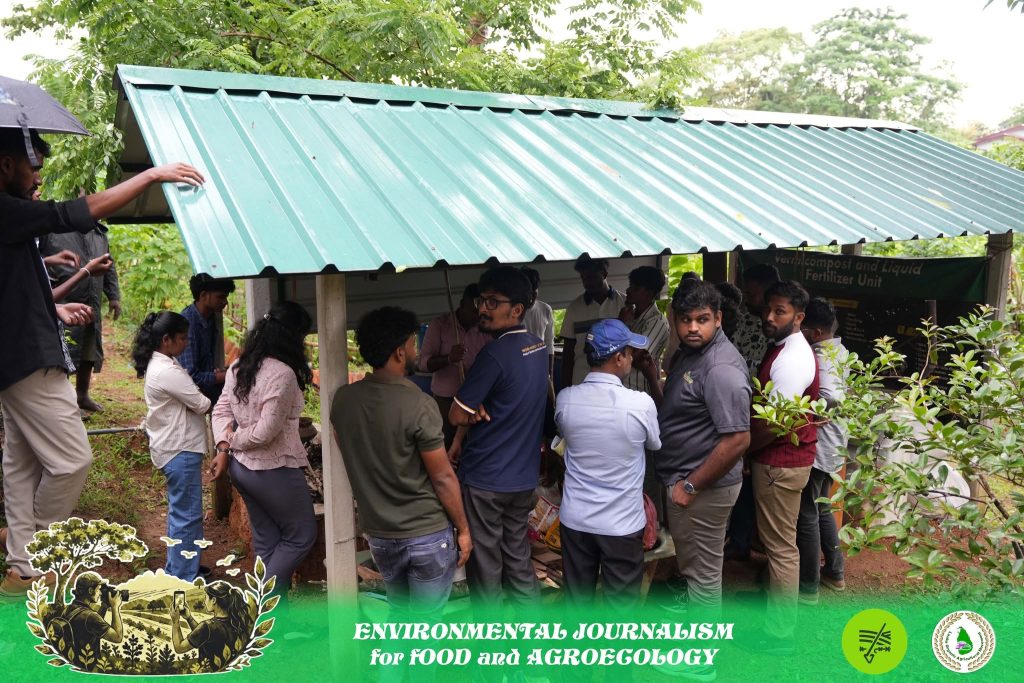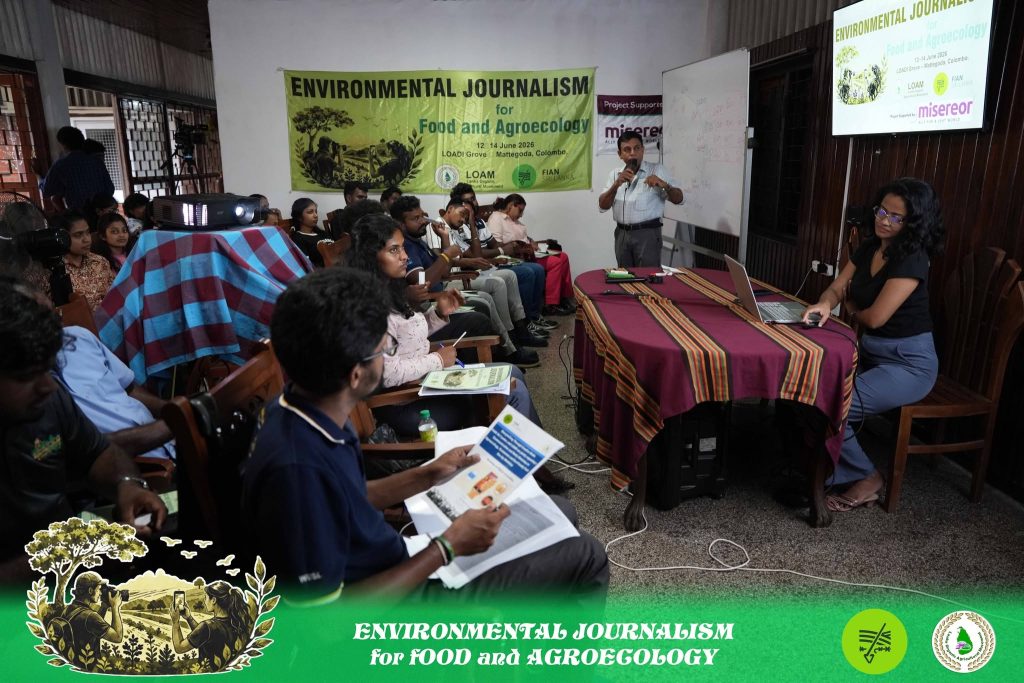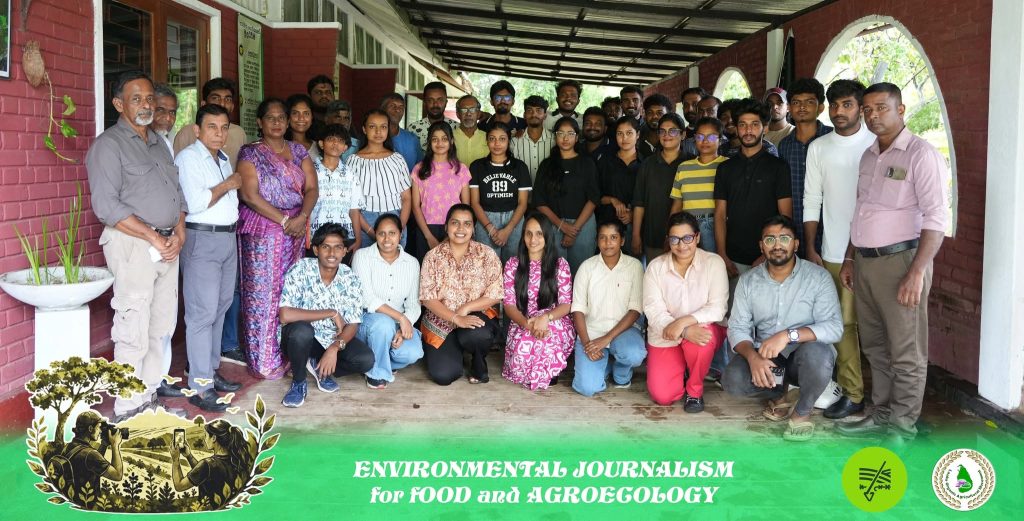
The first day of the Environmental Journalism Workshop, organized with the objective of promoting more responsible, accurate, and sensitive media reporting on the right to food, agroecology, biodiversity conservation, and sustainable food systems in Sri Lanka, was successfully held on 12 June at the LOADI Grove Research and Training Centre in Mattegoda. The project is being supported by Misereor.
This three-day workshop has been designed for young people and social activists interested in the media sector as community communicators. Its primary aim is to build a deeper understanding of issues related to the environment, food systems, and agriculture, while strengthening participants’ reporting and communication skills.
The workshop commenced with a welcome address delivered by Mr. S. Vishwalingam, Administration Manager of the Lanka Organic Agricultural Movement (LOAM). This was followed by an introduction to the workshop’s objectives and expected outcomes by Mr. Thilak Kariyawasam, Chairman of LOAM.
Throughout the day, participants engaged in a series of lectures and practical sessions that explored the interconnections between environmental conservation, food systems, biodiversity, agroecology, and the role of media in communicating these issues.
Mr. Mahinda Kumara Dalupotha, Senior Lecturer at the University of the Visual and Performing Arts, delivered a session titled Food and Our Culture. He highlighted that food is not merely a source of nutrition but also a complex human and cultural element deeply intertwined with people’s identities, social relationships, and historical heritage. The session also examined how changes in food systems can influence cultural values and ways of life within communities.
This was followed by a presentation by Mr. Ajantha Palihawadana, Special Projects Director of the Lanka Organic Agricultural Movement (LOAM), on Biodiversity, Ecosystem Conservation, and Food Forestry. The session focused on the importance of healthy ecosystems, the value of local biodiversity, and the potential of food forestry as a sustainable solution for strengthening environmental resilience and food systems.
A practical session on Agroecology and Agricultural Inputs was facilitated by Mr. Indika Sampath, Field Officer of LOAM. Participants gained hands-on knowledge of environmentally friendly farming practices, the use of natural agricultural inputs, and sustainable cultivation methods.
The final lecture of the day was conducted by Mr. Somapala Herath on Ecological Cultivation and Organic Agriculture. The discussion highlighted environmentally sustainable agricultural approaches, farming systems that work in harmony with nature, and the importance of organic agriculture in ensuring future food security.
The day concluded with a session on the fundamentals of photography conducted by Mr. Kalyananda Perera, Media Advisor to LOAM, who introduced participants to the basic principles and techniques of photography as an important tool for effective communication.
Through this workshop, participants are expected to develop a deeper understanding of environmental and agricultural issues while enhancing the media and communication skills required to report and communicate these issues accurately, critically, and responsibly.
The workshop will continue over the next two days, covering a wide range of topics aimed at further strengthening participants’ capacities in environmental journalism and community communication.